
· From the SAC blog
SAC Interview with Rabbi Benjy Owen by Ethan Marcus – 3 Generations of SAC
Ethan: You are a part of a family that has been involved with SAC for many years, correct?
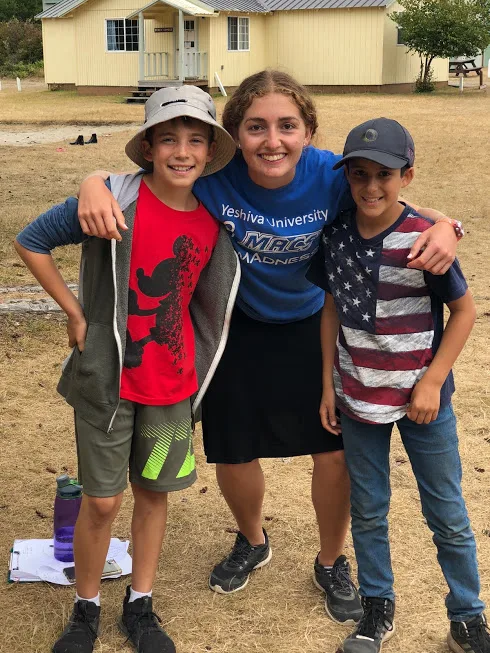
Rabbi Benjy Owen: Yes. My father, Ruben Owen, was the camp director for SAC in the 1970s before Camp Bishop, in Western Washington. And before that, my grandfather, Jack Behar was involved in a lot of youth programming at Ezra Bessaroth and that brought him into SAC. I was Assistant Camp Director when I was 17 around 1990, then I became camp director in the mid-1990s. My wife, Jodilyn, was also a partner with me; she was a CIT Director, Art Director, and just all-around support system for me at camp. My children too have been very involved for many years. My daughter Julia was Assistant Camp Director last year and my son Jeffrey was Head Boys Counselor. My brother Jacob’s family is also very involved with SAC. He and his wife Tanya live in Los Angeles and currently, they have two sons who attend camp, so we have a lot of camp in our blood!
EM: That’s amazing! Have you ever heard any stores from your Papou (Grandfather) and father about what camp life was like way back when?
Rabbi: My father talked a lot about how it was a very much a volunteer initiative of the community to run the camp. They would start to meet in February to plan out menus, programs and logistics for the summer. They hired counselors to help run the camp and there was always a very strong sense of volunteerism within the Seattle Sephardic Community when it came to SAC. My father also has some fantastic stories about different community members being at camp. For example, he speaks very fondly of Hazzan Azose and his wife Lily Azose a”h coming to camp and they used to have pranks like putting fish in kids bunks, (which would never fly these days), and other funny things. There was so much fun. He also talks a lot about how the Sephardic community was a little different then. The kids going at that time were generally the children of immigrants, so camp was really the one place where even though children came from all over the place, whether it be Seattle, Bellevue, or somewhere else in Washington, camp was the one place where kids got to be in one Sephardic community. They got to experience genuine Sephardic observance and a sense of belonging that many did not get in other environments. It connected so many Sepharadim who really had no connection with their roots or Jewish identity with other Jews in a really meaningful way. It was a really special place to be.
EM: Tell me about your experience as a camper and how it influenced your style of leadership at camp.
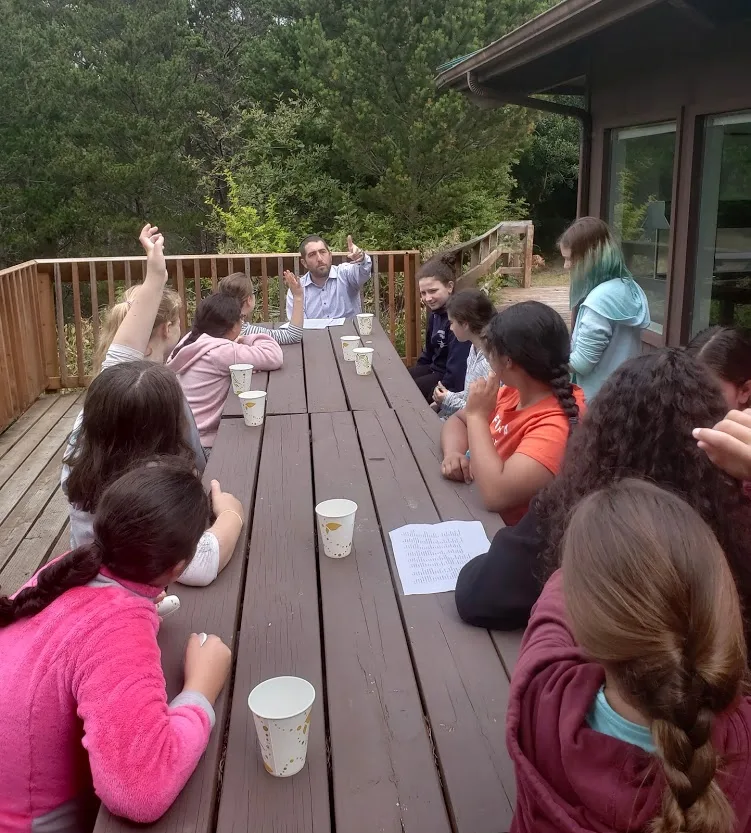 Rabbi: I always felt very comfortable and at home at camp. I started camp when I was two or three, and probably went every year as a camper until I was about 15 years old. I always wanted to be there and a part of it. I loved being a part of a group of “Seattlies” in this different environment. There was one particular person at camp named Richard Okrent who really influenced my teaching and leadership style later on in life. He was the Youth Director at EB and he’s such an incredible person. He was all about the kids and he was CRAZY. He had such incredible skill in forming programs and giving his all to everything at camp. We were so committed to him and whatever he wanted to do we would do it. Through him, we were totally connected to camp and synagogue. He was a great model for me personally in terms of his leadership style and thinking about the kids and their needs. He brought a sense of education and learning to everything at camp.
I remember once at SAC we recreated the Dreyfus Affair, where each one of us had a specific role at the trial. It was a Shabbat afternoon and Richard gave us a whole script of everything that occurred, with plaintiffs and defendants, and prosecutors, but through the whole process we learned! There were other amazing activities where we had incredible exposure to Sephardic Jewish education. One time we played the role of Benjamin of Tudela – the famous 12th century Sephardic Jew who traveled the world visiting different Jewish communities from Europe all the way to Asia. Around the camp, we would create different stations manned by counselors, who would dress up as different characters, and the campers would walk around and hear their stories as the representatives of different Jewish communities around the world. We even had Spanish Inquisition activity one year that was pretty amazing.
I don’t think anywhere else in my life I would have the chance to learn about these things. There was never a place in my schooling or home life about Sephardic history and identity. It was a tremendous opportunity for me.
EM: How did it influence your leadership style at camp?
Rabbi: One huge element in my leadership style is creating agency for kids and students. I really believe in the importance of adults helping students find their voice. I learned that in part from Richard. It was really important for me to also create a strong Sephardic environment at camp, no matter what it was. Obviously, I’m not sure how you play something like football in a Sephardic way, but creating a climate at camp with a strong sense of family unity, open-mindedness, and an emphasis on tefillah and learning Torah. Bringing that all together and creating a unique culture is something I strived to include at camp.
EM: What was your experience like as camp Rabbi?
Rabbi: Later on, I was camp rabbi for a number of years and would teach sessions. It was such a pleasure! It was almost like a vacation for me. Roll out of bed for tefillah, go have the breakfast of champions with a piece of Kuijado and a Boreka and a cup of Café. I could teach a few sessions and we even tried to create a kollel of sorts. We invited some post high school grads and we would learn Gemara and Halakha. The day was just fantastic.
EM: Do you have any funny stories from camp?
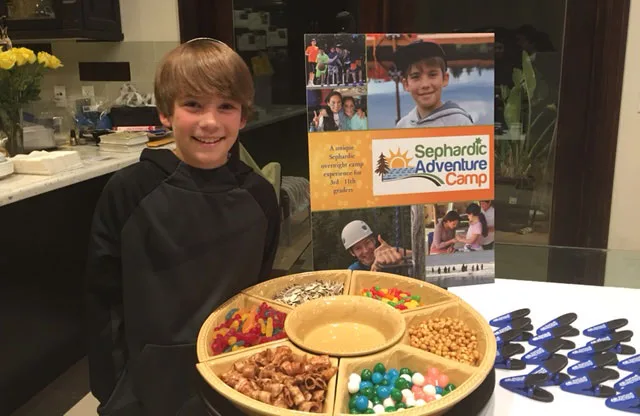
Ruben Owen at a SAC Open House in Valley Village, CA
Rabbi: You know we started the toilet seat while at camp with our friend Simon Amiel. That was a gift that we gave out for the cleanest bunk. We went down to Home Depot and bought a toilet seat and gave it out to the bunk and it was the best. The kids loved it. We had a number of funny raids too. I remember I went on an overnight trip and came back the next day, where the kids had put a huge canoe in my cabin and they dressed the whole cabin up like a lake and it was so funny.
There’s one great story where one year, we had a special July 4th fireworks night on the lake and we bought a massive number of fireworks. We set it up at a safe distance and were very excited. It was so big that other boats and nearby residents would come over to get a little closer and watch the show. One time, we noticed that there was a group of teenagers on a boat that after the fireworks show, they came up on shore, which was very concerning. So, we locked down the camp and we were worried there were trespassers on the property – and it was a good pack of teenagers/college age kids. A few of us got together some baseball bats and clubs and went to find this rogue group. We found them in the bushes and they took off running and we ran after them as fast as we could and drove them out of camp. We took their boat and secured it and they never came back. This was in around 1996.
Fast-forward 10 years later, my son was having a small procedure at the Swedish Hospital in Seattle and I got into a conversation with a mother waiting for their son. She said they owned a coffee company in Shelton WA, and I said “Wow, our camp is just nearby. I’d like to stop to try so of the coffee on the way up to camp.” About 3 weeks later I’m going up to camp and stop by the coffee shop. I meet this guy named Roco and said I wanted to try the coffee along my way to Camp Bishop. He said, “Really, that’s so interesting! I used to go to the lost lake near Bishop with my friends nearly every summer.” I said “No kidding? our camp is right near there.” He said, “Very interesting. You know about 10 years ago, a couple of us were in our boat and wanted to watch a firework show nearby, so we got out of the boat and wanted to just hang out, and all of the sudden these crazy people started chasing us out of nowhere with bats and clubs and we thought these guys were gonna kill us!” So, I said “Yeah, that was my pal!” It was hilarious and we had a good laugh about that. here are so many more stories I can think of.
EM: Are there any rules of thumb that you’ve passed from one Owen Family camp leader to another?
Rabbi: What’s been passed down is a sense of tradition of the camp among my family. There’s this certain streak within our family that believes keeping the traditions of camp alive and while. 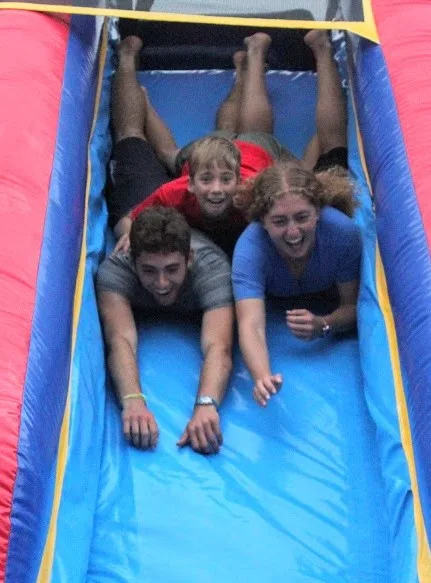
EM: You know camp is a little different from the times when your father and you went, but what would you say are some real core features that have been preserved.
Rabbi: The idea of communal meals and singing and Sephardic Birkat Amazon are all still a huge part of camp. Torah sessions and Shabbat being a special day at camp. Bringing the core parts of our Sephardic community – our tunes, our tefilloth – bringing those into daily life has been really well preserved. Involving our counselors as the role models from our Sephardic communities and giving them the positions of role models has been great. They come to understand what the camp is about and why it’s so unique. That’s really special.
EM: Do you have any advice to future campers and counselors?
Rabbi: Just go to camp! You gotta go to camp, you cannot miss a year. It’s such a wonderful place and you’ll have a great time.